Building Spatial Intelligence: Introducing Our Newest AI Scientists
The AI team at Augmenta is hiring!
We have one open role for an AI and Visual Computing Scientist. Apply today if you want to be a part of an R&D team to advance spatial and functional intelligence in the physical world and help us build 3D foundation models for construction and develop AI-enabled and user-friendly tools to assist architects, engineers, and designers in solving complex problems in the build environment.
Recently, three new members have joined the AI team to advance this vision forward!
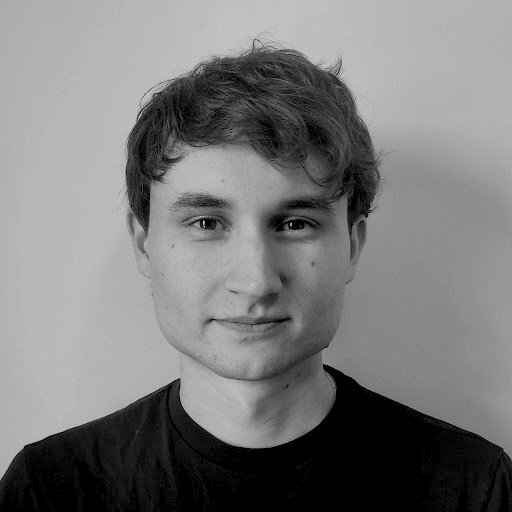
Lorenzo Mambretti joins the team as a Principal Computational Engineer. He was one of the longest serving members of the Engineering Team at Augmenta, having started in 2020 when the company was still young. He had the opportunity to work on a variety of interesting problems. Starting with collision avoidance, path planning, and deep learning models for robotics, he moved to focus on problems applied to MEP design.
In that domain, his work has been centered mostly on developing and bringing to production algorithms of computational geometry, optimization, and path-finding in 3D environments. Lorenzo has always been passionate about AI and machine learning, when he was introduced to the topic when studying Mathematics at the University of California, Davis. Currently in the AI team, Lorenzo is developing structured representations for 3D buildings, for reasoning and generative tasks, laying the groundwork for spatial and functional AI that will power Augmenta's 3D foundation models for construction.
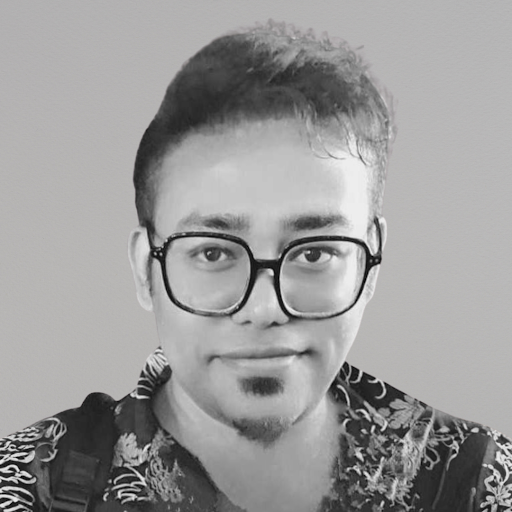
Sauradip Nag is a Senior AI Scientist focusing on the intersection of foundational models and physical AI. He brings deep expertise in 3D generative modeling, structured representation learning, and multi-modal AI to Augmenta. Sauradip completed his PhD in Computer Vision and Deep Learning at University of Surrey, UK, and most recently served as a Postdoctoral Researcher at Simon Fraser University's GrUVi Lab, working on multi-modal generative modeling.
His research covers 3D/4D and video/image generation, along with image, video, and 3D understanding, with 20+ publications at top venues like SIGGRAPH, NeurIPS, ICLR, CVPR, ICCV, ECCV, AAAI, and ICASSP. He's contributed pioneering work in novel generative-based approaches to audio-video understanding, pioneering 4D interpolation from sparse-view images, a unified foundation model for spatial understanding, and controllable 3D-aware part editing in images. Leveraging his extensive background in foundational generative-AI research and applied 3D/spatial reasoning, Sauradip drives the development of innovative solutions for complex engineering challenges, pushing Augmenta's mission of building 3D foundation models for the built environment.
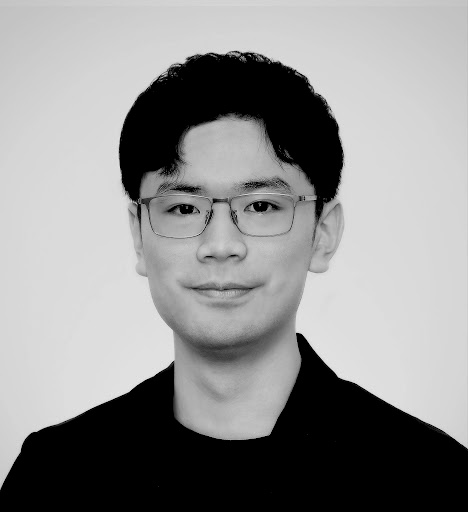
Derek Pun joins Augmenta as an AI Scientist with a research background in AI-driven 3D scene generation and structured spatial reasoning. He holds an M.Sc. in Computing Science from Simon Fraser University, and an M.Sc. in Immersive Technologies (VR & AR) from the University of Bristol. In Derek’s masters thesis research, he designed an end‐to‐end text‐to‐3D scene generation pipeline that combines vision-language models (VLMs) with hierarchical scene structures for controllable synthesis. In addition, he built SceneEval, a benchmark with fine‐grained annotations for evaluating coherence in text‐to‐3D scene synthesis. Earlier in his program, he also implemented a few‐shot LLM pipeline that learns visual programs for 3D object arrangements from 1–3 examples. These works led to publications in premier computer vision venues such as 3DV and WACV. Derek’s combined expertise in scene synthesis, hierarchical spatial reasoning, and XR/immersive systems aligns closely with Augmenta's work on generative 3D models for the built environment. He is currently working on leveraging LLMs and VLMs for generative design of floorplans and 3D building structures, striving to build practical AI for design and construction.
Welcome to the team!
