
What's in this case study
C&R ran two back-to-back projects with the same VDC team. Here's what you'll find inside.
01
on Willow Elementary alone
02
in modeling time
03
in material waste
01
Manual routing doesn't scale with project complexity.
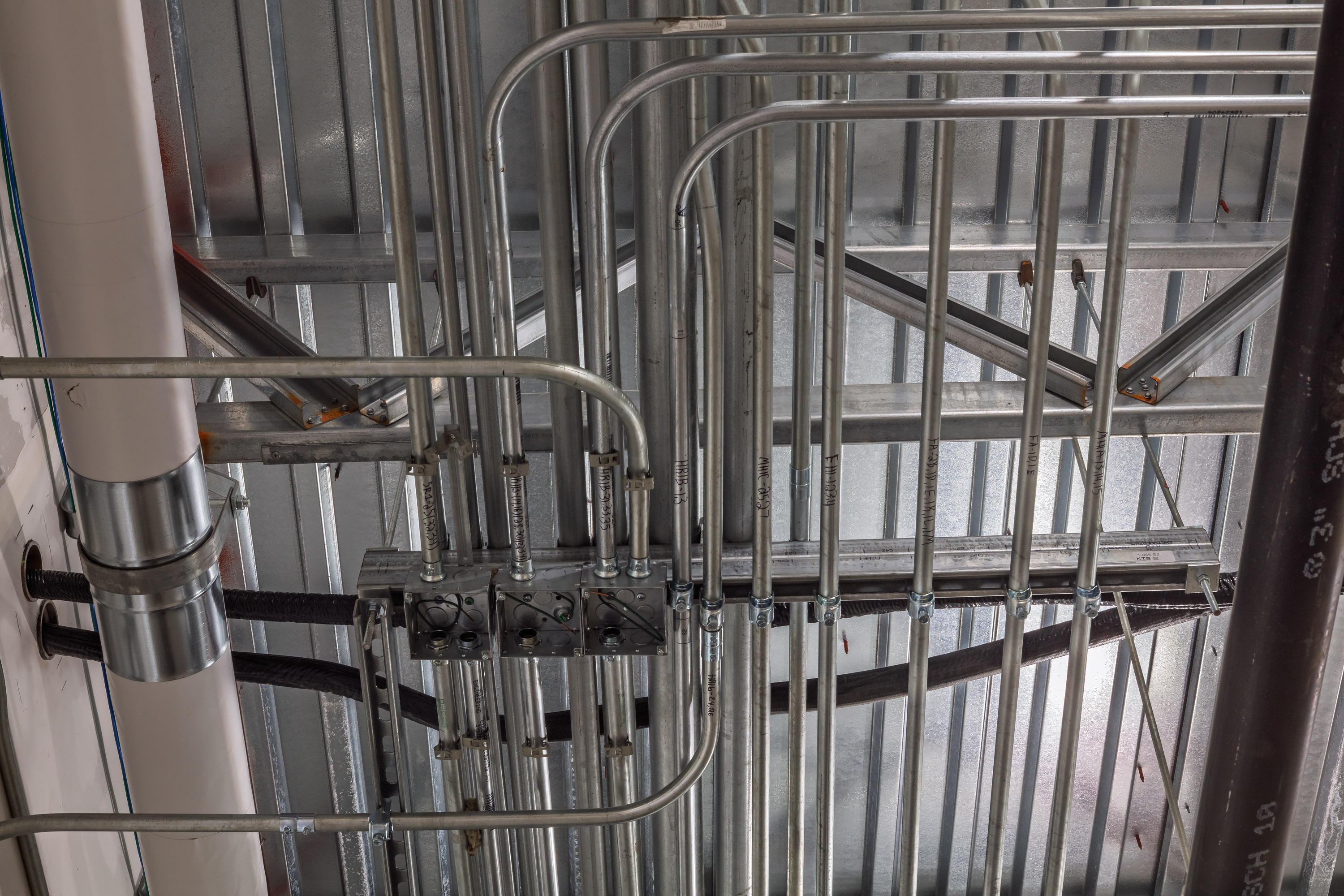
Electrical contractors inherit incomplete designs. Engineers place source and destination points, and everything after that falls to the VDC team: routing thousands of feet of conduit around structure, working through clashes with other trades, and getting the model clean enough to send to the prefab shop. On a manageable job, that process sort of works, but on bigger projects all of that time spent "drawing conduit down corridors" means weeks of VDC time.
Coordination challenges also scale exponentially with project size. More conduit, more structural obstacles, more trade partners, more clashes to resolve. C&R Electric had already proven that a different approach could work on their first use of AI-powered routing and coordination. Their question going into Willow was whether those results would hold on something significantly more complex.
02
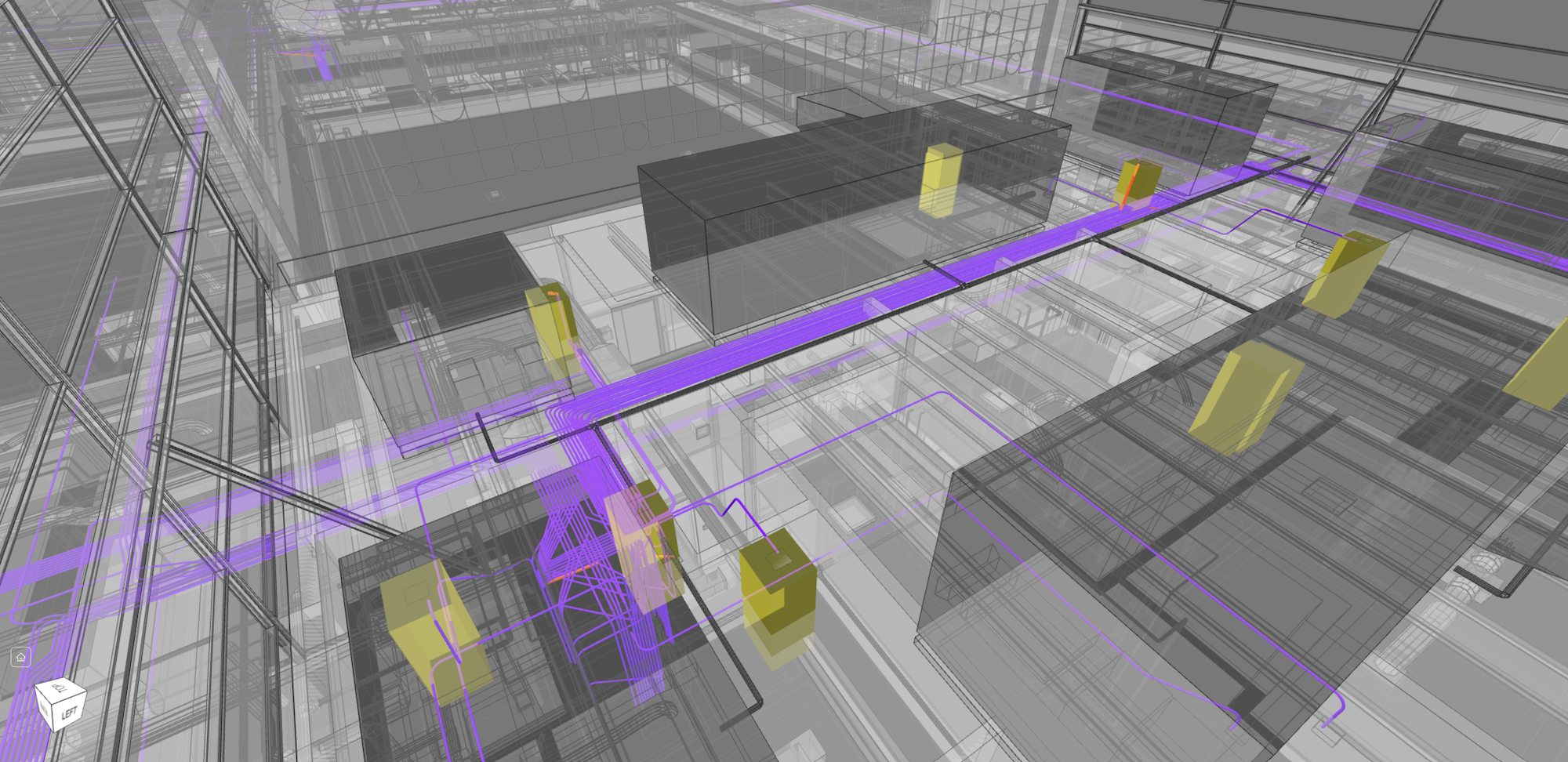
Augmenta Construction Platform (ACP) generates construction-ready electrical raceway models using AI-powered modeling, routing and coordination in hours, instead of weeks.. It integrates directly into existing Revit workflows, handles clash avoidance automatically, and gives VDC teams full control over design decisions while automating the heavy lifting of conduit routing and multi-trade coordination.
03
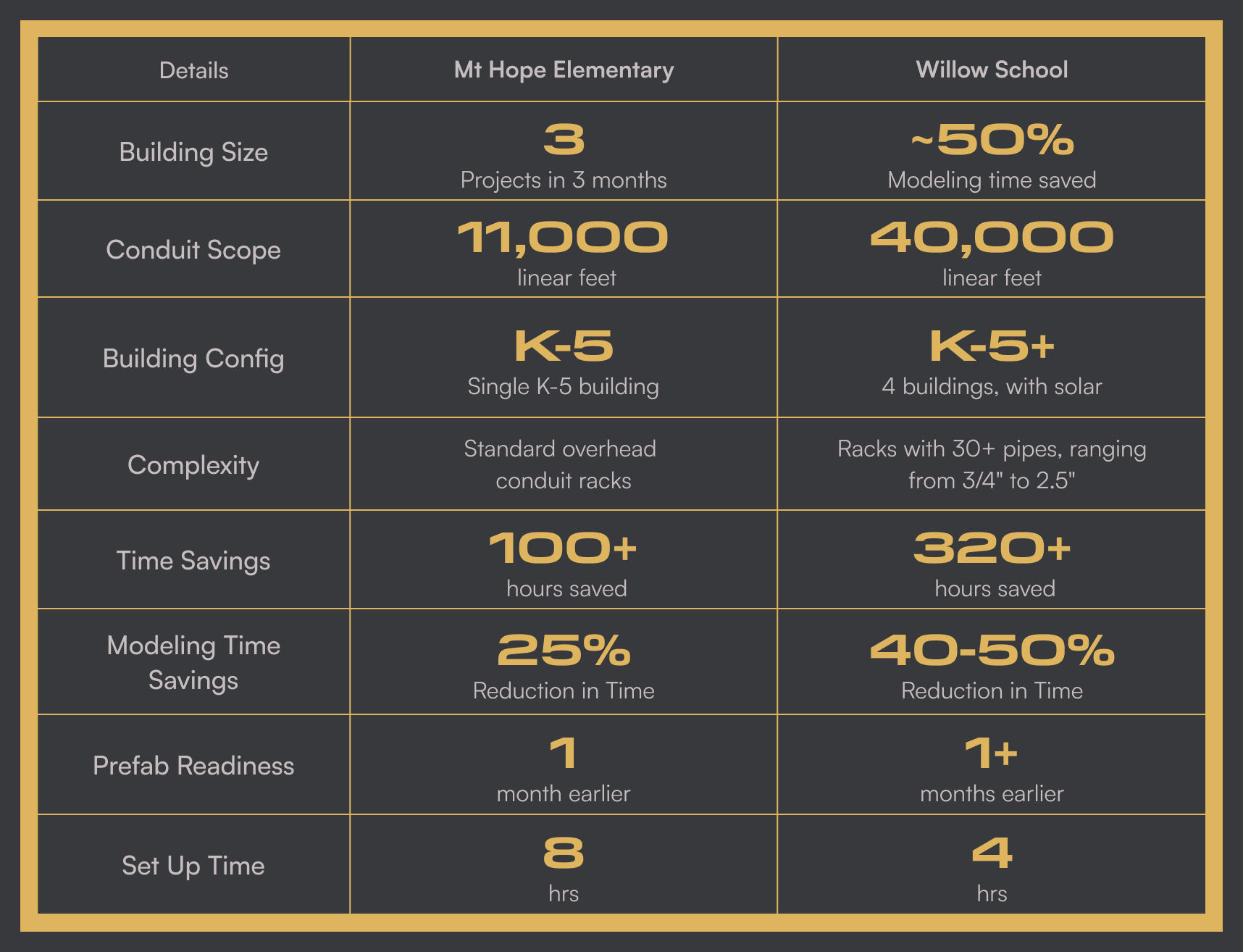
What C&R Electric achieved using Augmenta on two successive building projects.
Case Study
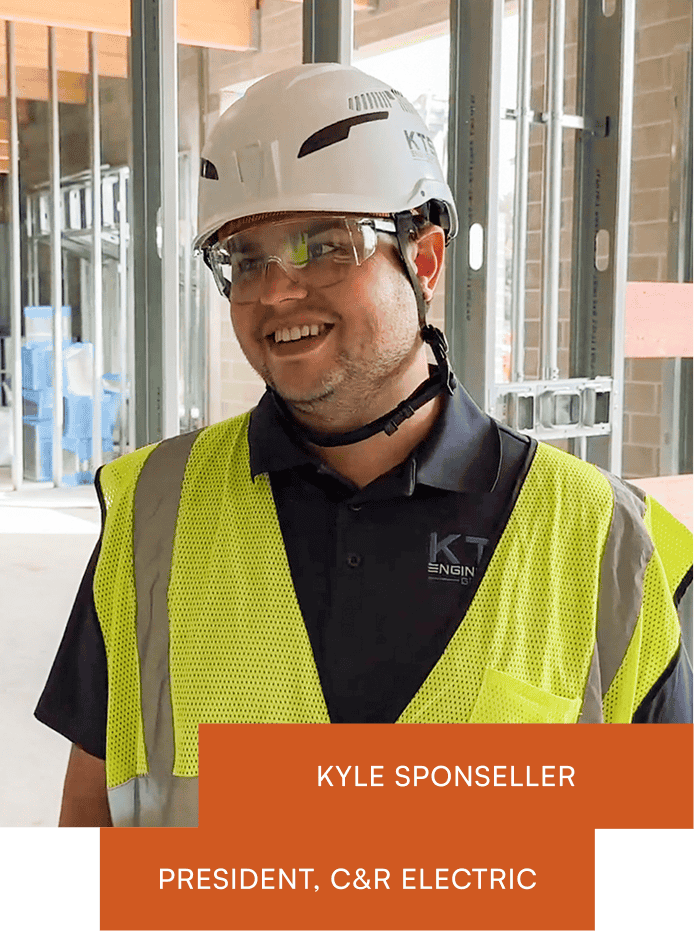
Kyle Sponseller
President, C&R Electric
FEATURES
WHAT YOU SHOULD KNOW
Frequently asked questions
Can we customize it to our standards?
Yes. You define spacing rules, support methods, clearances, and routing preferences.
Does ACP work with Evolve, Excel, and SysQue?
Yes. ACP reads your existing conduit schedules, and exports native Revit elements that work with your downstream tools.
How accurate are the routes?
ACP generates clash-free routes that account for spacing rules, clearances, and code requirements. You still review and adjust, but you're starting from 90% populated.
What if we're already using another tool?
We've worked with teams transitioning from other coordination platforms. The real question: is your current manual workflow tedious? If so, ACP 2.0 can save you time.
What's the learning curve?
Most VDC teams are running projects in ACP within two weeks. We provide hands-on training and don't leave until your team is comfortable.
Will this slow us down while we learn it?
No. Cloud processing means ACP runs in the background while your team keeps modeling. First project might take a bit to learn some of the steps. By the second, you're saving time and getting hours back for higher-value tasks.
C&R ELECTRIC CASE STUDY
Download the case study to take a closer look at how C&R Electric used Augmenta on two back-to-back projects to save 320+ hours saved on modeling, and how electrical contractors are using AI to automate routing, eliminate coordination errors, and force-multiplying their existing VDC teams.
